
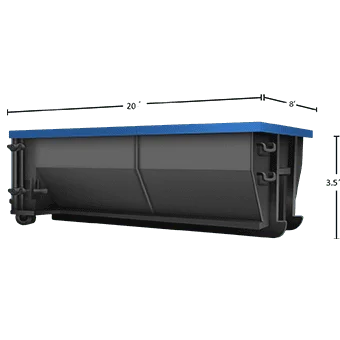
A loading space needs more than the container footprint
The supplier needs to review the approach and space used to place and retrieve the offered container. Describe the surface, overhead obstructions, gates and other constraints you know about. Do not assume a parked-container measurement describes the complete delivery operation.
Explain where workers will bring material from and how other users move around the site. Keep the loading position from becoming an improvised storage area for unrelated equipment. Discuss surface protection or another position with the supplier where it is a concern rather than promising that every surface is suitable.
Check the actual placement arrangement
St. Louis City’s blocking-right-of-way process explicitly includes dumpsters occupying streets, sidewalks or curb lanes. Coordinate the applicable public-space arrangement for the proposed location; this City process is not a rule for every County municipality or Illinois address.
For the actual property, identify the contact responsible for the space throughout loading and collection. Communicate changes before the agreed position becomes blocked. Placement permission and the rental supplier’s material conditions are different parts of the order.
Keep loading within the agreed scope
Confirm the accepted contents and loading limits for the proposed container. Explain heavy or unusual material before booking and ask about an exchange if the project needs one. A change in debris type should be discussed before it is added to the load.
Keep retrieval access available and follow the agreed collection instructions. Ask about duration and extension terms while the rental is being arranged. Use Get a Quote with the address, material description and loading period to discuss a complete roll-off hire.